


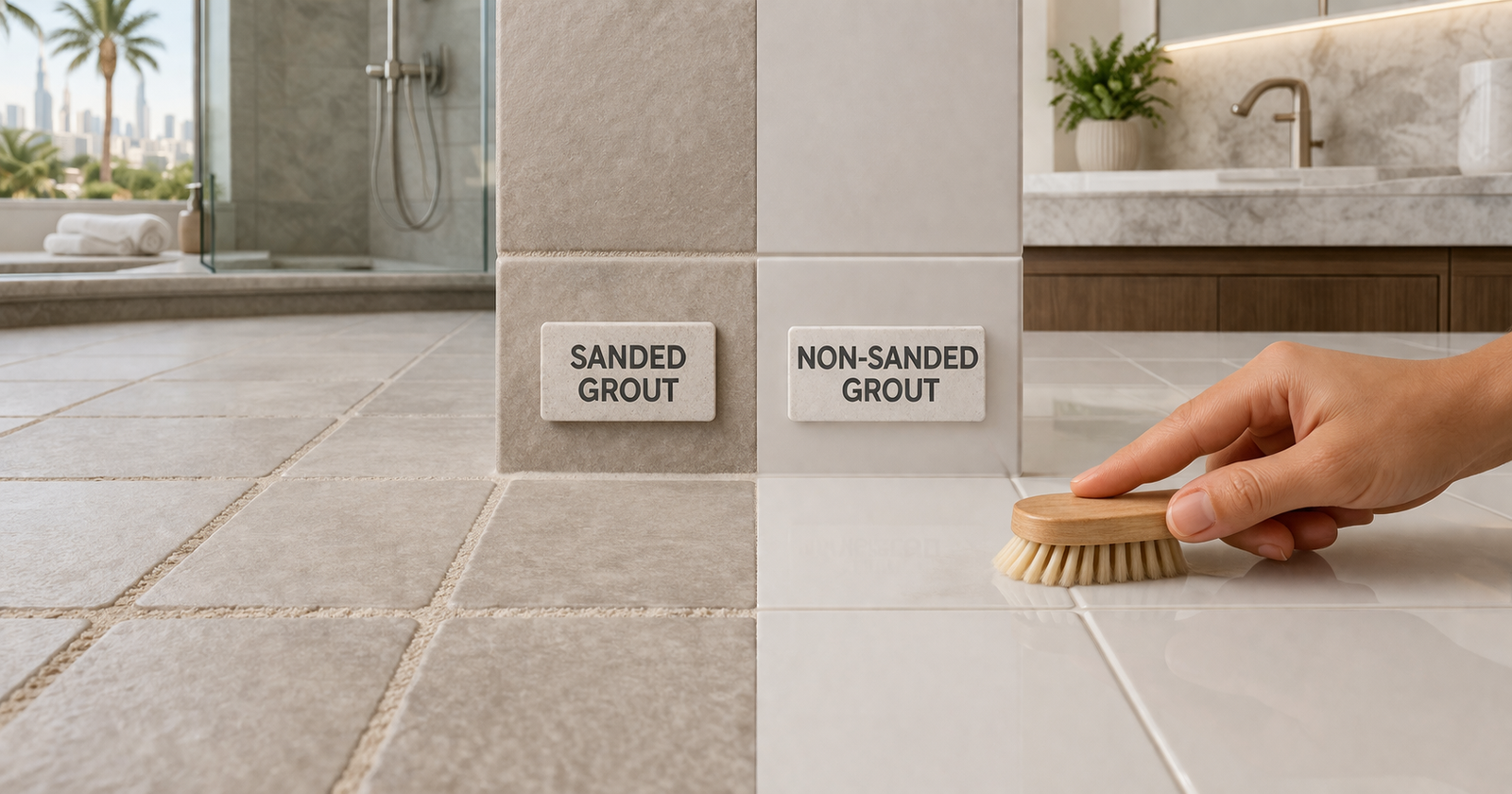
Comparing Sanded vs. Non-Sanded Grout: Choosing the Right Option for Your Dubai Floors
Grout may seem like a small part of your tile, but it plays a big role in how your floors and walls look and last. Many Dubai homeowners focus on cleaning tiles but forget that grout needs the right care too. Before you start scrubbing bathroom tiles, kitchen backsplashes, or floor joints, it is important to know whether you have sanded grout or non-sanded grout.
Using the wrong cleaning method can damage grout, fade its color, or weaken the tile joints over time.RefineSpace helps Dubai homeowners with safe, effective tile and grout cleaning for bathrooms, kitchens, and floors. Whether your grout has dirt buildup, stains, or early signs of wear, we help restore a cleaner look while protecting the surface.
What Is Sanded Grout?
Sanded grout contains fine sand particles. It is stronger and more durable, which makes it a common choice for wider grout lines, especially on floors.
You will often find sanded grout in:
- bathroom floors
- kitchen floors
- hallways
- balconies
- utility rooms
Because of its rougher texture, sanded grout handles traffic better. That is why it is often used in areas that see more foot movement.
What Is Non-Sanded Grout?
Non-sanded grout has a smooth texture and does not contain sand. It is usually used for narrow grout lines and more delicate surfaces.
You will often find non-sanded grout in:
- shower walls
- bathroom wall tiles
- kitchen backsplashes
- polished stone surfaces
- decorative wall tiles
Because it is smoother, it is better for areas where a rough grout could scratch the tile.
Main Difference Between Sanded and Non-Sanded Grout
The biggest difference is texture and use.
Sanded grout is rougher and stronger, so it works well in wider joints.
Non-sanded grout is smoother and better for narrow joints and delicate finishes.
This matters when cleaning because each type reacts differently to brushes, chemicals, and scrubbing pressure.
Why This Matters in Dubai Homes
Dubai homes deal with a mix of dust, humidity, hard water, and regular cleaning. These conditions can make grout dirty faster.
In bathrooms, grout often collects soap scum, water stains, and mildew.
In kitchens, grout can trap grease, dust, and food residue.
On floors, regular mopping can still leave dirt sitting inside the grout lines.
That is why Dubai homeowners should not treat all grout the same way.
How to Identify Your Grout
Here are a few simple ways to tell the difference:
Feel the surface
If the grout feels rough or grainy, it is likely sanded grout.
If it feels smooth, it is likely non-sanded grout.
Look at the grout line width
Wider joints usually use sanded grout.
Narrow joints usually use non-sanded grout.
Check the location
Floor grout is often sanded.
Wall grout is often non-sanded.
How to Clean Sanded Grout
Sanded grout is usually a bit tougher, but it still should not be cleaned with harsh chemicals.
Best cleaning options:
- pH-neutral tile cleaner
- warm water
- soft or medium brush
- grout-safe cleaner for deeper dirt
Avoid using strong acids or metal brushes. These can wear down the grout and remove any protective sealer.
Perfect Guidance Before Cleaning “I had no idea there was such a big difference between sanded and non-sanded grout until I read this guide. It helped me avoid using the wrong cleaning method on my bathroom tiles. Thanks to Refine Space, my grout looks fresh and undamaged!”
Muhaimieen– Business Bay
How to Clean Non-Sanded Grout
Non-sanded grout needs a gentler cleaning method because it is smoother and often used next to delicate tile.
Best cleaning options:
- pH-neutral cleaner
- soft brush or toothbrush
- microfiber cloth
- non-abrasive sponge
Do not scrub too hard. Aggressive brushing can damage the surface and make the grout wear out faster.
What Not to Use on Grout
Whether your grout is sanded or non-sanded, avoid these common mistakes:
- strong acidic cleaners
- undiluted bleach
- wire brushes
- abrasive powders
- random DIY chemical mixes
These may seem effective at first, but they often do more harm than good.
Should Grout Be Sealed?
Yes, in many cases grout should be sealed. Sealing helps protect it from moisture, stains, dust, and everyday dirt.
This is especially useful in Dubai homes where bathrooms and kitchens are exposed to frequent cleaning, humidity, and mineral deposits from water.
When Cleaning Is Not Enough
Sometimes grout is not just dirty. It may be damaged.
Signs of damaged grout include:
- cracks
- crumbling
- missing sections
- uneven color after cleaning
- mold returning quickly
In these cases, grout repair or resealing may be a better solution than more scrubbing.
How RefineSpace Can Help
Not sure whether your grout is sanded or non-sanded? RefineSpace helps Dubai homeowners clean tile and grout the right way without causing damage. From bathroom grout cleaning to kitchen tile maintenance, our team focuses on safe methods that remove buildup, protect grout lines, and help your tiled surfaces look fresh again.Our team supports Dubai homeowners with professional tile and grout cleaning that removes dirt, stains, and buildup using the right method for each surface
If your grout is stained, dull, or difficult to clean, RefineSpace can help you choose the right solution before the problem gets worse.
Final Thoughts
Before cleaning grout, the first step is knowing what type you have. Sanded grout and non-sanded grout are not the same, and cleaning them the same way can lead to damage.
For Dubai homeowners, the safest approach is simple: use the right cleaner, avoid harsh chemicals, and clean gently based on the grout type. A little care goes a long way in keeping tile surfaces looking clean, fresh, and long-lasting.
FAQs
What is the difference between sanded and non-sanded grout?
Sanded grout contains fine sand particles and is usually used for wider grout lines, while non-sanded grout has a smoother texture and is better for narrow joints and delicate tile surfaces.
Which grout is easier to clean?
Both can be cleaned well, but the method matters. Sanded grout is usually more durable, while non-sanded grout needs a gentler cleaning approach to avoid damage.
Can I use the same cleaner for both types of grout?
It is best to use a grout-safe, pH-neutral cleaner for both. Avoid harsh chemicals, especially if you are not sure what type of grout you have.
How do I know if my grout is sanded or non-sanded?
You can often tell by touch and joint size. Sanded grout feels rougher and is usually in wider lines, while non-sanded grout feels smoother and is commonly used in narrow joints.
Why does grout get dirty so quickly in Dubai homes?
Dust, humidity, hard water, kitchen grease, and daily foot traffic can all cause grout lines to collect dirt and stains faster.
Can harsh scrubbing damage grout?
Yes. Using the wrong brush or strong chemicals can wear down grout, fade the color, and shorten its lifespan.
When should I call RefineSpace for grout cleaning?
If your grout looks stained, dull, or hard to clean, RefineSpace can help with professional tile and grout cleaning using the right method for your surface.
Need Help Cleaning Grout the Right Way?
Let RefineSpace help restore a cleaner, fresher look to your bathroom, kitchen, or tiled floors. Contact RefineSpace today to book a professional cleaning service.