


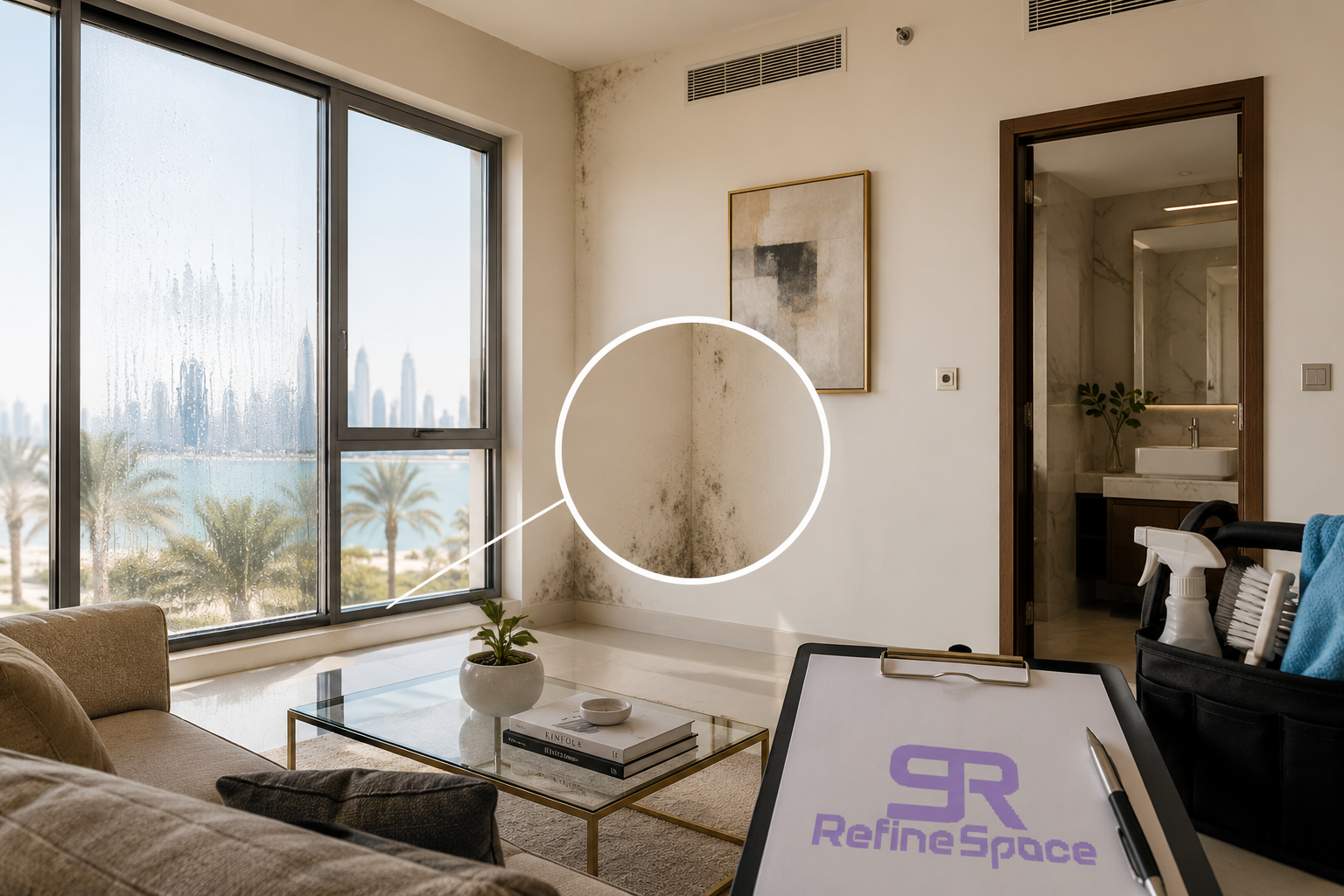
Is There Mold In Your Villa? 6 Warning Signs To Look For In Dubai
The most common signs of mold in a villa are a musty, damp smell, followed by dark spots on walls, ceilings, or grout, then peeling paint or unexplained allergy symptoms. Catching these signs early stops a small patch from turning into a much bigger, more expensive problem.
What Causes Mold to Grow in Dubai Villas?
Mold needs three things to grow: moisture, warmth, and a surface to feed on — and Dubai villas often provide all three without homeowners realizing it. Outdoor relative humidity in the city regularly climbs above 60-70% during the summer months, and when that moist air meets a cool AC-cooled wall or window, condensation forms. This is one of the main drivers behind humidity mold growth in Dubai, alongside poor ventilation in bathrooms, laundry rooms, or store rooms.
Villas are particularly susceptible because of their larger surface area, multiple bathrooms, and garden-facing walls that trap moisture. Older AC ducting is a common source of AC mold growth, and a slow, unnoticed leak behind a wall can quietly feed mold for weeks before it becomes visible.
6 Warning Signs of Mold in Dubai Villas
Mold doesn’t always announce itself with obvious black patches. Here are the early indicators worth checking for room by room:
- A persistent musty smell in the house — often the very first sign, even before anything is visible
- Small dark or greenish spots, or visible mold on walls, ceilings, or corners, especially near AC vents
- Peeling or bubbling paint, or wallpaper lifting at the seams
- Warped skirting boards or wooden furniture near exterior walls
- Condensation on windows or mirrors that doesn’t clear even with the AC running
- Unexplained sneezing, coughing, or eye irritation — common mold allergy symptoms that improve when you leave the house
If two or more of these show up in the same area, it’s worth investigating further rather than waiting.
How Can You Tell Mold Apart From Regular Dirt or Water Stains?
Water stains are usually a single, dry, yellow-brown ring that doesn’t change once the leak is fixed. Mold, on the other hand, has texture — it can look fuzzy, slightly raised, or powdery, and it tends to spread outward over days or weeks rather than staying static. A simple form of mold detection at home: dab a small amount of diluted household bleach on the spot. If it lightens noticeably within a couple of minutes, it’s likely mold; a plain stain won’t react the same way. Mold also tends to return in the same spot within days even after wiping it down, since the surface growth is only part of the problem — moisture is usually still trapped underneath.
What Are the Signs of Mold in a Bathroom Specifically?
Bathrooms are the most common starting point for villa mold because of constant moisture and, often, limited airflow. Watch for black or grey speckling along silicone sealant around the bathtub or shower, discoloration in the grout lines that doesn’t scrub away, and a damp patch on the ceiling directly above the extractor fan. These bathroom mold signs are often the earliest and easiest to catch. Cabinets under the sink are another frequent hiding spot — a musty smell when you open the cabinet door is usually the first clue, even before any visible growth.
Left unaddressed, bathroom mold can spread into adjoining walls, which is where a professional villa deep cleaning service becomes far more effective than surface wiping
Which Areas of a Villa Are Most Prone to Mold?
Beyond bathrooms, a few other zones deserve regular checks. Mold in kitchen cabinets, especially where pipework runs under the sink, traps moisture in the same way bathroom cabinets do — a thorough kitchen deep cleaning periodically clears this buildup before it becomes visible. Laundry rooms with poor ventilation are another common spot, particularly around the washing machine drain.
Mold under carpet and rugs laid over cooler flooring can also trap humidity without any visible sign on the surface — a periodic carpet cleaning service that lifts and dries the material properly helps catch these hidden mold signs early. Furniture pushed flush against exterior-facing walls is worth pulling out and checking every few months too, since airflow behind it is often minimal.
How Can You Prevent Mold Growth in Your Villa?
Prevention is far easier than removal, and most of these mold prevention tips for villas come down to consistent small habits:
- Run extractor fans during and for 15-20 minutes after showers
- Open windows briefly each day, even with the AC on, to let trapped moisture escape
- Have AC units and ducting serviced roughly every 6 months to prevent condensation buildup
- Use a dehumidifier in consistently damp rooms like laundry areas
- Fix leaking taps or pipes as soon as they’re noticed, not weeks later
- Schedule a routine deep clean every few months to catch problems before they spread
None of these require major renovation — they’re mostly about staying ahead of moisture before it settles in.
Dubai’s coastal humidity and heavy AC reliance make villas across the city more prone to hidden mold than many homeowners expect, which is why routine checks matter more here than in drier climates. RefineSpace works with villa owners across Dubai, serving Al Quoz, Al Barsha, and surrounding areas, and our team regularly sees how quickly early-stage mold can be resolved when it’s caught before it spreads into walls or flooring.
I actually found a musty smell in my daughter's bathroom last month and had no idea what to look for. This article walked me through exactly what to check — the grout, the AC vents, even under the sink cabinet. Turned out it was early-stage mold behind the sealant. So glad I caught it before it spread.
Rashid Al Falasi
When Should You Call a Professional Mold Removal Service?
DIY cleaning works for small, surface-level spots — a bit of mold on bathroom sealant, for instance. But if the affected area is larger than roughly the size of an A4 sheet, keeps returning within days of cleaning, or is paired with ongoing respiratory symptoms in the household, it’s time to bring in a professional mold removal cleaning service rather than continuing to treat the surface.
Professional deep cleaning goes further than household products — using appropriate antimicrobial treatments, drying out the affected area properly, and checking nearby surfaces that may already be affected but not yet visible. This matters because surface cleaning alone often leaves the moisture source untouched, which means the mold simply returns.
Why Choose RefineSpace
RefineSpace has spent years deep cleaning villas across Dubai, and mold-related callouts are one of the situations our team handles most often — particularly in bathrooms, kitchens, and laundry areas where humidity builds up unnoticed. We use targeted cleaning methods and equipment suited to villa-sized spaces, not just quick surface treatments. For broader guidance on indoor dampness and health, the World Health Organization’s guidelines on indoor air quality are a useful reference point.
If you’ve spotted any of the warning signs above in your villa, our team can take a look and advise on the right next step before it spreads further.
Contact RefineSpace today for a professional mold assessment in Dubai. Call us at +971 54 436 0616 or book online.
In short: Mold rarely appears out of nowhere — a musty smell, a discolored patch of grout, or paint that’s started to bubble are usually the first clues, well before the problem becomes serious. Checking bathrooms, kitchen cabinets, and laundry areas regularly, and acting on early signs of mold, is what keeps a minor issue from turning into a costly one. When in doubt, a professional assessment is a quick way to confirm what you’re dealing with and stop it at the source.
Frequently Asked Questions (FAQs)
Q1. Can mold in a villa make you sick?
Ans: Yes — prolonged exposure to indoor mold can trigger sneezing, coughing, skin irritation, or worsened asthma symptoms in some people, particularly in poorly ventilated rooms.
Q2. How quickly can mold grow in a Dubai villa?
Ans: Under the right conditions — high humidity plus a damp surface — visible mold growth can start appearing within 24 to 48 hours, though it often goes unnoticed until it’s more established.
Q3. Is black mold more dangerous than other types?
Ans: Black mold (often Stachybotrys) is frequently associated with stronger black mold symptoms, but any mold type can cause irritation with prolonged exposure, so it’s best not to wait to identify the exact species before addressing it.
Q4. Can I remove villa mold myself, or do I need a professional?
Ans: Small, surface-level patches can often be cleaned with household products. Larger, recurring, or hidden mold (behind walls or under flooring) usually needs professional treatment to fully resolve.
Q5. Does running the AC constantly cause mold?
Ans: Not on its own — but poorly maintained AC units or ducting can create condensation that feeds mold growth, which is why regular servicing matters.
Q6. How much does professional mold removal typically cost in Dubai?
Ans: Costs vary depending on the affected area’s size and severity, but a straightforward professional assessment and treatment for a single room is generally more affordable than most homeowners expect.