


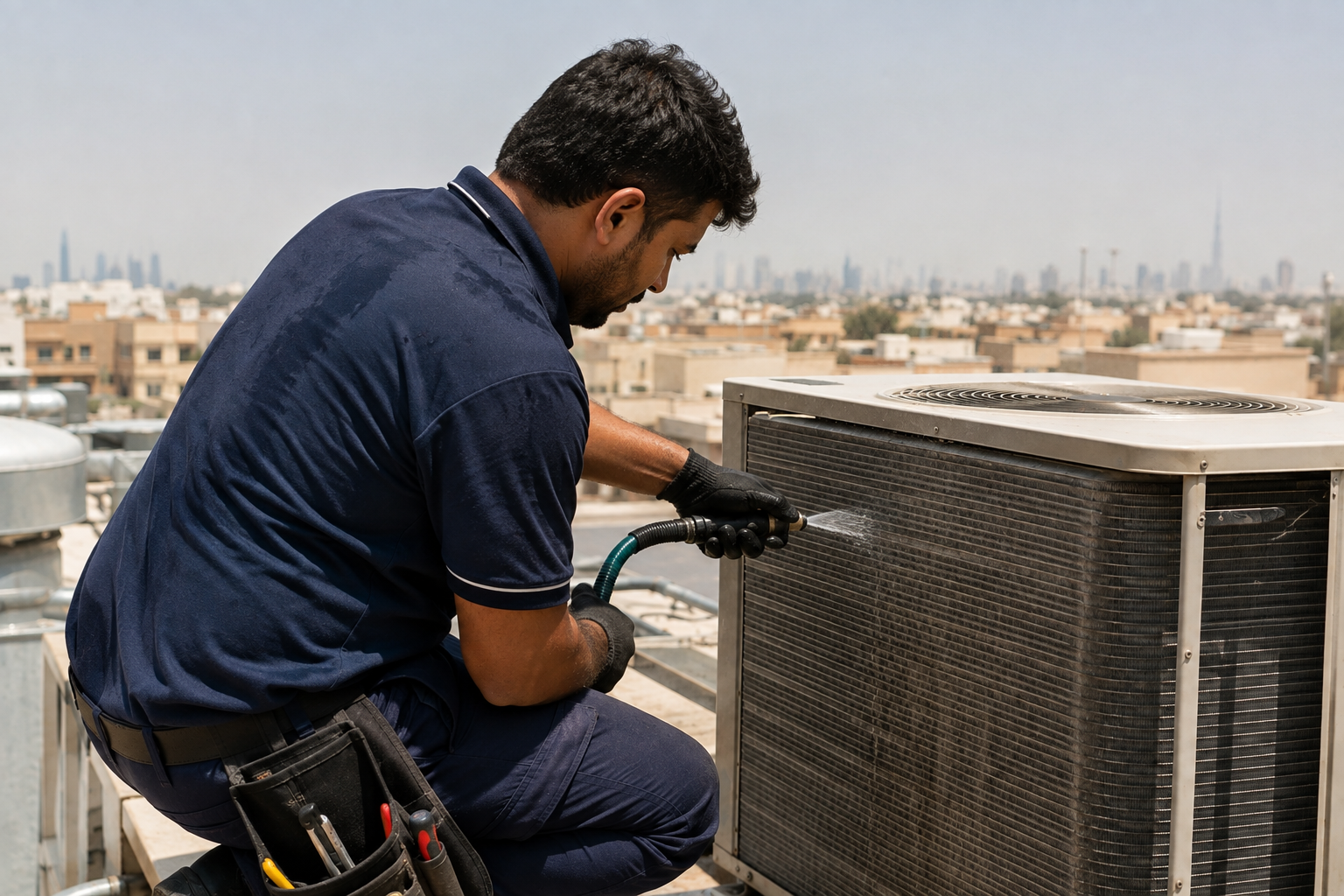
Common AC Problems in Dubai Homes: Causes & Fixes
Your air conditioner switches on before sunrise and rarely rests until well after midnight. That’s simply how cooling works in Dubai, and it’s exactly why common AC problems appear here faster than almost anywhere else on the planet.
Between blistering summer heat, fine desert dust, and relentless humidity, a Dubai AC unit works two to three times harder than the same system would in a milder climate. Components wear out faster, filters clog within weeks instead of months, and small issues turn into full breakdowns during the worst possible week of August.
At Refine Space, our technicians service AC systems across Al Quoz, Downtown Dubai, and the wider emirate every week. The same handful of issues show up again and again, and almost all of them are preventable once you know what to look for.
This guide walks through exactly what causes each problem, how to catch it early, and when it’s time to call a professional instead of reaching for a screwdriver.
Key Takeaways
- Dubai’s heat, dust, and humidity accelerate AC issues like dirty filters, refrigerant leaks, and clogged drains far faster than cooler climates.
- Ignoring early warning signs — weak airflow, water pooling, unusual noises — usually turns a small fix into an expensive compressor replacement.
- Dirty filters and condenser coils cause the majority of weak-cooling complaints in Dubai homes, and they’re also the easiest problems to prevent.
- Musty odors and visible mold aren’t just unpleasant; they signal indoor air quality risks that can affect asthma and allergies.
- Twice-yearly professional AC maintenance, timed before and during peak summer, prevents most breakdowns in UAE homes.
Why Do Dubai Homes Face More AC Problems Than Anywhere Else?
Dubai’s summer temperatures regularly exceed 45°C, forcing AC units to run almost non-stop for five to six months a year. Add fine desert sand that infiltrates filters and coils within weeks, plus high humidity that keeps condensate lines working overtime, and you get a climate that ages AC components far faster than normal wear and tear.
Peak summer in the UAE isn’t just hot; it’s relentless. Outdoor units placed on balconies, rooftops, or building shafts absorb radiant heat all day, then have to reject that heat back outside just to keep your living room at a comfortable 24°C.
Fine desert sand is the other silent culprit. It settles into filters, coils, and ductwork within two to three weeks during dusty spells, cutting airflow long before anyone notices a problem.
High humidity, especially from May through September, means AC units pull far more moisture from the air than in drier climates. That constant condensation is exactly why clogged drain lines and water leaks are such a frequent complaint across Dubai villas and apartments.
What Are the Most Common AC Problems in Dubai Villas and Apartments?
The most frequent AC issues in Dubai are dirty air filters, low refrigerant, clogged condensate drains, dirty condenser coils, electrical or capacitor failures, and units that run constantly without cooling the room properly. Below, each problem is broken down by cause, warning signs, and fix.
1. Dirty Air Filters and Weak Airflow
A blocked filter is the single most common reason for weak cooling in Dubai homes. Once dust and sand build up, airflow across the evaporator coil drops, and the coil can actually freeze over.
When that ice eventually melts, it often overwhelms the drain pan and shows up as a mysterious puddle near the indoor unit. Filters in Dubai should be checked every two to four weeks during peak summer, not the standard once-a-month advice used in cooler countries.
For homes where dust has already worked its way past the filter and into the system itself, a filter change alone won’t fully restore airflow. Our AC cleaning service handles the filter, and our professional AC duct cleaning clears out the ductwork behind it.
2. Low Refrigerant Levels and Poor Cooling
If your AC runs constantly but the room never quite reaches the set temperature, low refrigerant is usually the reason. Refrigerant doesn’t get consumed during normal operation, so a drop in level almost always points to a leak somewhere in the coils or line set.
UAE regulations restrict refrigerant handling to licensed technicians, and improper recharging can permanently damage the compressor. A trained team can pressure-test the system, locate the leak, and recharge it to the manufacturer’s correct level.
3. Clogged Condensate Drain Lines and Water Leaks
Dubai’s humidity means AC units produce significant condensation, especially between May and September. When the drain line clogs with dirt, sludge, or algae, water backs up and can leak indoors near the unit, sometimes triggering an automatic safety shutoff.
If you notice water pooling or staining near your indoor unit, the drain line and pan usually need clearing before any other repair is attempted.
4. Dirty Condenser Coils and Overheating
The outdoor condenser coil releases the heat absorbed from inside your home. When it’s coated in desert dust, pollen, or debris, the system can’t release that heat efficiently, so the compressor works harder and pulls noticeably more electricity.
Over time, that added strain shortens compressor lifespan and raises the risk of a full breakdown during peak heat. Scheduling professional AC coil cleaning before and during summer keeps the outdoor unit releasing heat the way it’s designed to.
5. Electrical and Capacitor Failures
Extreme summer heat stresses electrical components like capacitors, contactors, and wiring. A worn capacitor prevents the fan motor from starting, while loose connections or tripped breakers can shut the entire system down without warning.
These faults carry real safety risks and should never be handled without proper training. If you notice humming noises, a fan that won’t start, or a breaker that trips repeatedly, our certified electrical services team can safely diagnose the issue.
6. AC Not Turning On At All
When an AC unit shows no signs of life, the cause is usually a tripped circuit breaker, a dead thermostat battery, or a faulty electrical connection. Start by checking the breaker box and resetting it once.
If the unit still won’t start, or the breaker trips again immediately, stop troubleshooting and call a professional. Repeated tripping usually means a deeper electrical or compressor fault that needs proper diagnosis.
7. Strange Noises: Grinding, Squealing, and Buzzing
Unusual sounds almost always point to a specific mechanical problem. Squealing or grinding usually means worn motor bearings or a failing belt, while rattling points to loose parts or debris trapped inside the unit.
A buzzing sound is more concerning; it often signals an electrical issue such as a failing relay or loose wiring, and it’s worth switching the unit off until a technician inspects it.
8. AC Producing Musty or Bad Odors
A musty smell almost always means mold or mildew growing inside the unit or ductwork. This happens when moisture accumulates faster than it can drain, creating exactly the damp environment mold needs to spread.
Dirty filters and blocked drainage are the two most common causes. Left unaddressed, mold spores can circulate through your home’s air every time the AC runs.
9. AC Running Constantly or Short Cycling
An AC that never shuts off, or one that switches on and off every few minutes, wears out its components far faster than normal use. Both patterns usually trace back to a faulty thermostat, an oversized unit, dirty coils, or a refrigerant leak.
An oversized system cools the room too quickly without properly removing humidity, which forces it into a frustrating on-off cycle. A professional load assessment can confirm whether your unit is actually the right size for the space.
10. Sudden Spike in Energy Bills
A sudden jump in your DEWA bill, with no real change in how you use the AC, is one of the clearest signs something is wrong. Dirty filters and coils, an aging system, or a slow refrigerant leak all force the compressor to work harder than it should.
Systems older than ten to twelve years are also simply less efficient by design, and in Dubai’s climate, that inefficiency shows up on the bill fast.
The Health Risks Behind Ignoring AC Problems
A poorly maintained AC doesn’t just cool your home less effectively; it actively circulates dust, allergens, and mold spores through every room. For households with children, elderly residents, or anyone with asthma or allergies, that’s more than an inconvenience — it’s a genuine indoor air quality issue worth taking seriously.
The U.S. Environmental Protection Agency explains that condensate drain pans can become breeding grounds for mold and bacteria when they aren’t drained or cleaned properly, and that mold introduced into a ventilation system can spread throughout an entire home. That’s a practical reason to fix a musty smell the moment you notice it, not months later.
“When Refine Space cleaned our AC ducts and coils last summer, our electricity bill dropped noticeably in the very next cycle, and honestly, the air feels cleaner too. My daughter’s nighttime coughing eased up almost immediately.” — Ahmed R., Villa Owner, Arabian Ranches, Dubai
How to Prevent AC Problems in Dubai's Climate
Most AC breakdowns in Dubai are preventable with a consistent seasonal routine: clean or replace filters every two to four weeks in summer, keep the outdoor unit clear of debris, and schedule a professional inspection before peak heat arrives. A few small habits go a long way toward avoiding a mid-August breakdown.
- Clean or replace air filters every two to four weeks during peak summer months.
- Keep the outdoor condenser unit clear of dust, leaves, and vegetation.
- Schedule a professional inspection before summer begins to catch refrigerant, electrical, or drainage issues early.
- Set the thermostat between 23°C and 25°C to reduce strain on the compressor.
- Avoid running the AC nonstop without any breaks where possible, since continuous operation accelerates wear.
An ongoing AC maintenance plan bundles these seasonal checks into a single service, which is usually far more cost-effective than booking emergency repairs once something actually breaks.
When Should You Call a Professional for AC Repair in Dubai?
Some issues, like a dirty filter or an incorrect thermostat setting, are safe to check yourself. Anything involving refrigerant, electrical components, or persistent water leaks should go straight to a licensed technician rather than a DIY fix.
- Cooling weakens despite clean filters and correct thermostat settings.
- Water pools or leaks near the indoor unit.
- The system makes grinding, squealing, or buzzing noises.
- Your energy bill spikes suddenly without any change in usage.
- Rooms cool unevenly across the home.
How Often Should You Schedule AC Maintenance in Dubai?
Most residential AC systems in the UAE benefit from professional servicing at least twice a year — once before peak summer heat and again mid-season. Homes with pets, nearby construction dust, or units running almost around the clock often need quarterly attention instead.
Routine servicing typically costs a fraction of an emergency repair callout during peak summer, when demand for technicians is at its highest. Preventive maintenance is consistently the lower-cost option over a full cooling season.
Why Choose Refine Space for AC Maintenance and Cleaning in Dubai?
Refine Space combines Dubai Municipality-compliant health and safety standards with 100% eco-friendly, child- and pet-safe cleaning products, so your family’s air stays clean without harsh chemical residue. Every technician is trained and certified, every quote is transparent with no hidden costs, and every job is backed by a 100% satisfaction guarantee.
Whether you own a villa in Arabian Ranches or manage a restaurant kitchen in Business Bay, our villa deep cleaning services and dedicated AC care team are built around Dubai’s specific climate, not a generic checklist imported from a cooler country.
Browse the full range of home maintenance and cleaning services on the Refine Space homepage, or get in touch to schedule an AC inspection.
Common AC problems rarely stay small for long in Dubai’s climate — a dirty filter today is a frozen coil next week and a compressor replacement by the end of summer. Catching the early warning signs, sticking to a seasonal maintenance routine, and calling in trained professionals when something’s beyond a simple fix will keep your home comfortable through even the hottest months.
Frequently Asked Questions (FAQs)
Q1. What is the most common AC problem in Dubai homes?
Ans: Dirty air filters and reduced airflow are the most frequent issue, largely because Dubai’s desert dust builds up inside filters and coils within just two to three weeks during peak summer.
Q2. How often should I clean or change my AC filters in Dubai?
Ans: Check filters every two to four weeks during peak summer months, and clean or replace them as soon as you notice visible dust buildup or reduced airflow.
Q3. Why does my AC keep leaking water indoors?
Ans: This usually means the condensate drain line is clogged with dirt, sludge, or algae. High humidity in Dubai makes this one of the most common warm-season complaints, and the line typically needs professional clearing.
Q4. Can a poorly maintained AC actually affect my family’s health?
Ans: Yes. A neglected AC can circulate dust, allergens, and mold spores throughout your home, which may worsen asthma symptoms, allergies, and general indoor air quality, especially for children and elderly residents.
Q5. How often should I schedule professional AC maintenance in Dubai?
Ans: Most homes need professional servicing at least twice a year, once before peak summer and again mid-season, while homes with pets or heavy dust exposure often benefit from quarterly visits.