



Kitchen Cleaning Guide: What Dubai Homes Really Need
Most kitchen cleaning advice online is written for kitchens that don’t deal with limescale-heavy tap water, greasy stovetops from daily cooking, or humidity that turns a damp sponge into a bacteria magnet overnight. This kitchen cleaning guide is built specifically for Dubai and UAE homes, combining a proper top-to-bottom cleaning process with the local realities that most generic checklists skip entirely. By the end, you’ll know exactly what to clean, in what order, and which habits are quietly working against you.
Key Takeaways
- Dubai’s hard, desalinated water leaves limescale on taps and steel surfaces faster than most cleaning guides account for.
- Chopping boards, kitchen sponges, and sink drains harbor more bacteria than almost any other spot in the home.
- Cleaning top to bottom, in a fixed order, cuts the time a deep clean actually takes.
- Different countertop and cabinet materials need different products, and using the wrong one causes lasting damage.
- A short daily and weekly routine keeps your kitchen hygienic without needing a full deep clean every week.
Why a Kitchen Cleaning Guide Matters More in Dubai Homes
Dubai kitchens deal with hard water limescale, heat-driven grease buildup, and humidity-related pest activity far more aggressively than kitchens in milder climates, which is why a generic cleaning routine often falls short here. Understanding these local pressures first makes every step below far more effective.
Desalinated tap water leaves behind mineral deposits on faucets, stainless steel sinks, and glass surfaces noticeably faster than in areas with softer water. Daily cooking, especially frying-heavy meals, sends airborne grease onto cabinet fronts and range hoods within days of a clean. Add in Dubai’s humidity swings and near-constant AC use, and kitchens become an easy target for pests drawn to warmth, moisture, and food residue.
Where Bacteria Actually Hide in Your Kitchen
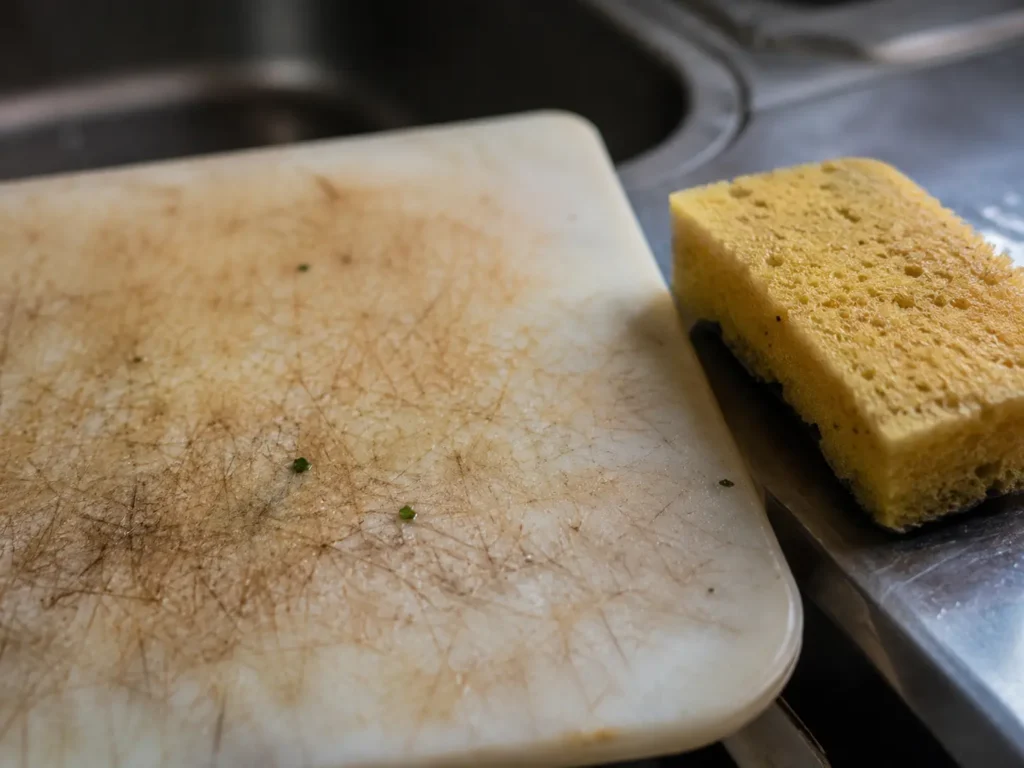
Chopping boards, kitchen sponges, sink drains, and knife blocks are consistently the dirtiest spots in any kitchen, often carrying more bacteria than a toilet seat. Knowing this changes where your cleaning effort should actually go.
Deep grooves in chopping boards trap food particles and moisture, creating ideal conditions for bacteria to multiply between washes. Kitchen sponges are just as bad, since they stay damp and are rarely replaced often enough. The World Health Organization’s food safety guidance centers on keeping surfaces and equipment clean and separating raw and cooked food, precisely because contaminated kitchen surfaces are one of the leading causes of foodborne illness at home.
Sink drains and the area directly in front of them also collect more microscopic contaminants than most people assume, simply from constant food and water contact. A quick daily habit of drying these zones and swapping sponges weekly closes most of this gap.
The Step-by-Step Kitchen Cleaning Guide
A proper kitchen deep clean follows six stages in order: declutter, dust from top to bottom, deep clean appliances, scrub the sink, clean surfaces, then finish with the floor. Following this sequence means dust and residue never land on a surface you’ve already cleaned.
Step 1: Declutter and Prep
Clear everything off your counters and open a window if you can, since this makes every step after faster and more thorough. Gather your cloths, sponges, and cleaners before you start so you’re not stopping mid-task to search for supplies.
Step 2: Dust and Wipe From Top to Bottom
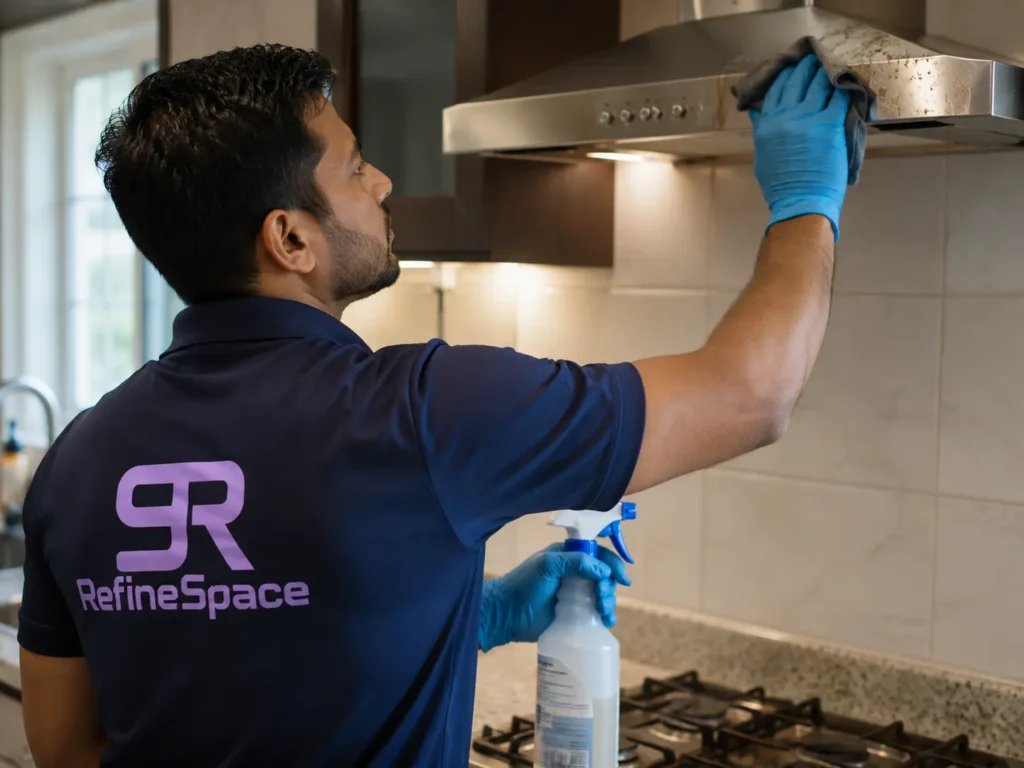
Start with the tops of cabinets, light fixtures, and the range hood, since dust here falls onto lower surfaces as you clean. Wipe cabinet exteriors and drawer fronts with a damp microfiber cloth, working in the direction of the grain on wood surfaces to avoid streaking.
Step 3: Deep Clean Every Appliance
Empty and wipe the inside of your fridge, discarding anything expired, then clean the exterior with a stainless-steel-safe cleaner if applicable. For the oven, a baking soda paste left overnight loosens baked-on grease without harsh chemical fumes. Steam the microwave with a bowl of water and a squeeze of lemon for five minutes to loosen splatters before wiping it out.
Step 4: Scrub the Sink and Tackle Hard Water Stains
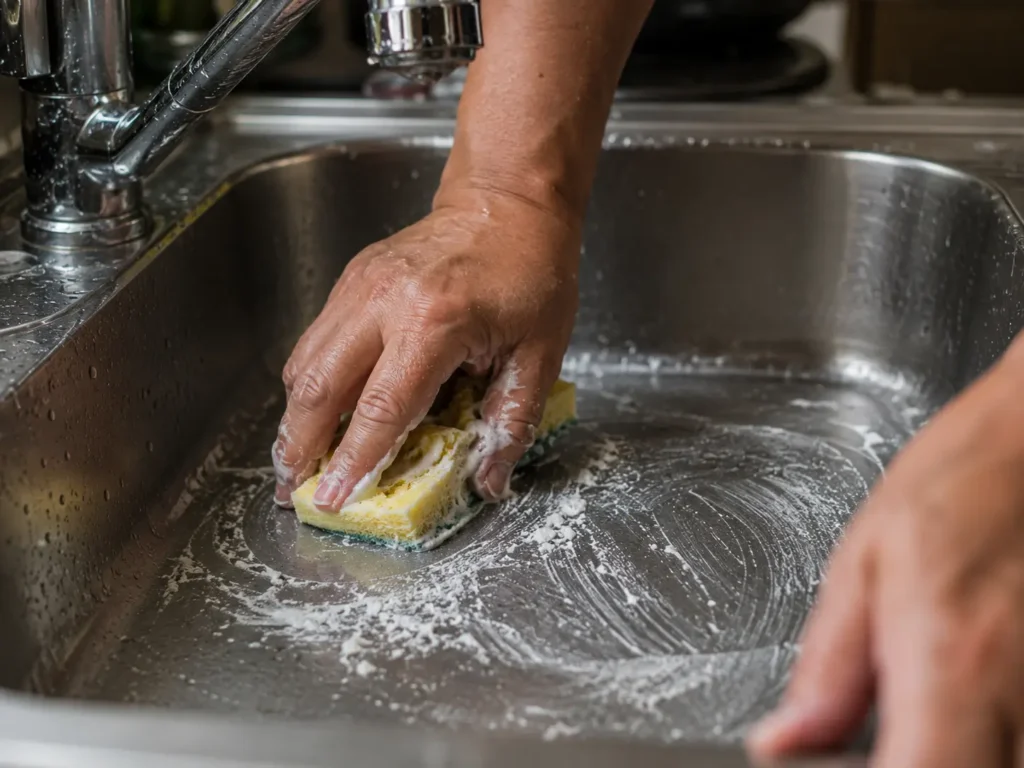
Scrub the basin with a baking soda paste, then focus on the taps, where limescale builds up fastest in Dubai’s water. A vinegar soak on affected areas for ten to fifteen minutes breaks down mineral deposits before a final rinse. If limescale keeps returning across your kitchen fixtures, it usually points to a broader water quality issue worth having checked, which is where water tank cleaning services come in.
Step 5: Clean Countertops and Cabinet Fronts the Right Way
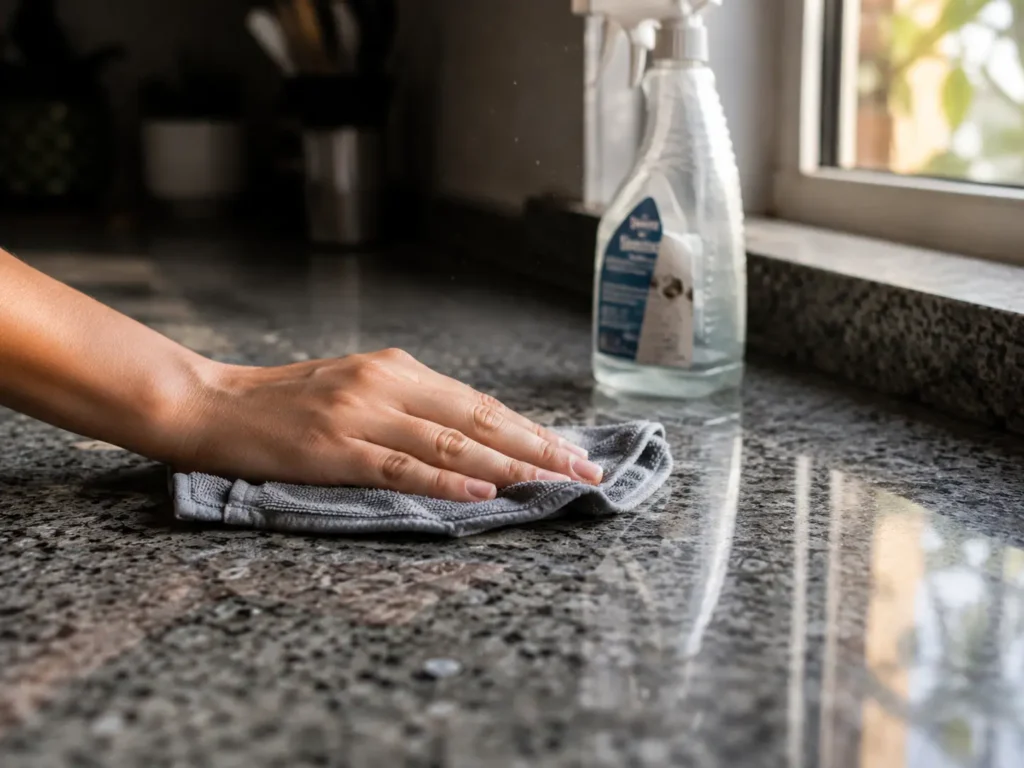
Spray countertops and let the cleaner sit for a couple of minutes before wiping, since this loosens grime instead of just pushing it around. Cabinet fronts need to be matched to their material, which the next section covers in detail.
Step 6: Sweep and Mop the Floor
Sweep or vacuum first to lift crumbs and dust, then mop with a solution suited to your flooring type. Dry the floor with a clean towel afterward to prevent streaking and reduce slip risk. For grout lines and tile joints that a regular mop can’t lift, tile and grout cleaning services handle the buildup a mop leaves behind.
Material-Specific Care: What Not to Use on Your Surfaces
Natural stone, glass, laminate, and wood cabinet fronts each need a different cleaning approach, and using the wrong product is one of the most common ways kitchens get permanently damaged. A cleaner that works beautifully on laminate can etch marble within weeks.
Natural stone countertops like granite and marble should never be cleaned with acidic products such as vinegar or citric acid, since these dull and pit the surface over time. Stainless steel responds best to a soft, damp microfiber cloth wiped in the direction of the brushed finish, since scrubbing against the grain leaves visible scratches. Glass and lacquered cabinet fronts show fingerprints and limescale quickly and are best cleaned with a mild glass cleaner rather than an all-purpose spray. Wood cabinet fronts should stay only lightly damp, since standing moisture can swell the wood at seams and edges over time.
Building a Kitchen Cleaning Schedule That Actually Sticks
Splitting kitchen cleaning into daily, weekly, and monthly tasks keeps the space hygienic without requiring a full deep clean every time, and prevents grease and grime from building up to the point where it needs a professional cleaning schedule to fix. A little consistency beats an occasional marathon clean.
- Daily: wipe counters and the stovetop, scrub the sink before bed, check and empty the trash.
- Weekly: vacuum and mop the floor, wipe down the fridge exterior and cabinet fronts, replace your kitchen sponge.
- Monthly: deep clean the oven and dishwasher filter, descale the kettle and taps, wipe out the fridge shelves and drawers.
- Quarterly: clean behind and underneath large appliances, inspect for pest activity, deep clean grout and hard-to-reach corners.
Eco-Friendly Kitchen Cleaning Products Worth Using
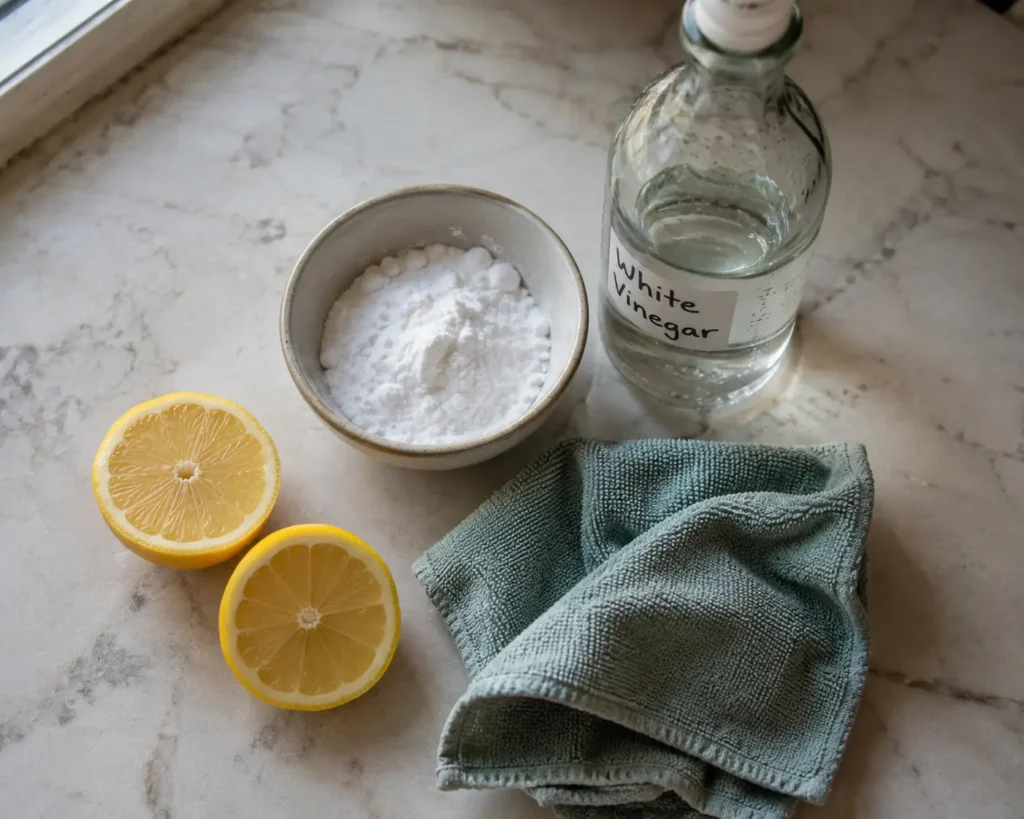
Baking soda, white vinegar, and lemon handle most kitchen grease removal and deodorizing jobs without the harsh chemical residue that ends up on food-contact surfaces. These basics cover the majority of what a kitchen actually needs.
A paste of baking soda and water lifts baked-on grease from ovens and stovetops without scratching most surfaces. Diluted white vinegar cuts through grease on laminate and glass, though it should be kept away from natural stone and waxed wood as noted above. A halved lemon left in the fridge for a few hours neutralizes odors naturally, which is a simple swap for artificial fridge deodorizers. If you’d rather skip mixing your own, professionally formulated eco-friendly products avoid the guesswork while still staying safe around food and children.
When to Call a Professional Kitchen Deep Cleaning Service
A DIY routine handles daily and weekly upkeep well, but grease buildup inside range hoods, ductwork, and behind heavy appliances usually needs professional-grade equipment to fully remove. Recognizing this line saves both time and your countertops.
At Refine Space, our kitchen deep cleaning services use eco-friendly, child- and pet-safe products alongside advanced equipment to strip built-up grease from hoods, hobs, and behind-appliance zones that a home routine can’t reach safely. Every visit follows Dubai Municipality-compliant hygiene standards, with transparent pricing and no hidden costs. For kitchens attached to a wider home refresh, our general deep cleaning services extend the same standard across the rest of the home, and our oven and BBQ deep cleaning services target baked-on grime that’s been building for months.
If persistent dampness near the sink or fridge has attracted pests despite regular cleaning, pairing your routine with pest control services closes that gap for good.
“I used to think my kitchen was clean until Refine Space showed me what was hiding behind the hob,” said Layla H., an apartment resident in Downtown Dubai. “The grease that had built up over months was gone in one visit, and the limescale on my taps hasn’t come back the way it used to.”
A consistent kitchen cleaning guide isn’t about spending your weekend scrubbing top to bottom every time. It’s about knowing which habits matter most in a Dubai kitchen specifically, and recognizing the point where a professional deep clean saves you more time and damage than doing it yourself. Get the daily basics right, and the bigger cleans become far less frequent.
Frequently Asked Questions
Q1. How often should I deep clean my kitchen in Dubai?
Ans: Most Dubai homes benefit from a full deep clean every one to two months, depending on how often you cook and whether hard water and grease buildup are visible on surfaces.
Q2. What’s the fastest way to remove grease from kitchen cabinets?
Ans: A paste of baking soda and a little dish soap, left on the greasy area for a few minutes before wiping with a microfiber cloth, cuts through most grease without damaging the finish.
Q3. Can I use vinegar on all kitchen surfaces?
Ans: No. Vinegar works well on laminate, glass, and stainless steel, but it should never be used on natural stone countertops or waxed wood, since the acidity can damage both over time.
Q4. Why does limescale build up so fast on my kitchen taps?
Ans: Dubai’s desalinated tap water carries a higher mineral content than many people expect, which causes limescale to form on taps and steel surfaces faster than in regions with naturally soft water.
Q5. Is it worth hiring a professional kitchen cleaning service if I clean regularly?
Ans: Yes, particularly for range hoods, ductwork, and behind heavy appliances, since these areas trap grease that a home routine typically can’t reach or remove safely.