


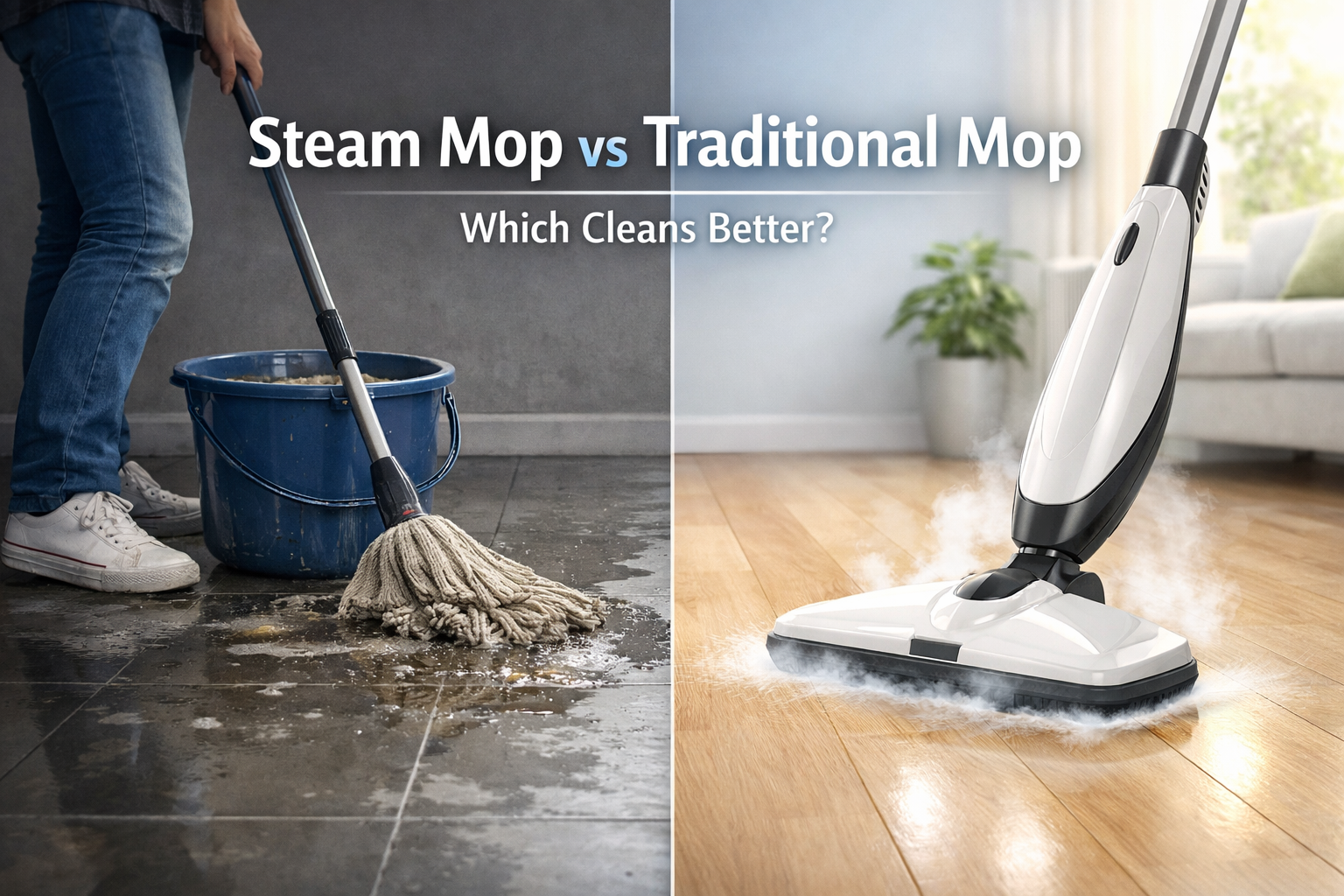
Which Floor Cleaning Method Suits Your Home? Steam Mops vs. Bucket and Mop
If you’ve ever stood in the cleaning aisle wondering whether a steam mop is actually worth it, you’re not alone. The classic bucket and mop setup has been around forever. It works. But it’s also messy, time-consuming, and not always as hygienic as it seems.
On the other side, steam mopping promises faster cleaning, chemical-free sanitation, and better results with less effort. Sounds great. But is it really better in real life?
Let’s break it down properly so you can decide what actually fits your home, your routine, and your standards.
What Steam Mopping Really Means
Steam mopping uses heated water vapor to clean surfaces. Instead of soaking your floor with dirty water, it uses high-temperature steam to loosen dirt, kill bacteria, and lift grime.
Here’s what’s happening:
- Water heats up inside the mop (usually within 30–60 seconds)
- Steam is released through a microfiber pad
- Dirt and bacteria are broken down and absorbed
What this really means is you’re cleaning and sanitizing at the same time, without chemicals.
How Bucket & Mop Works (And Where It Falls Short)
The traditional method is simple:
- Fill a bucket with water (and usually detergent)
- Dip the mop
- Spread water across the floor
- Rinse and repeat
It gets the job done, but here’s the catch:
You’re often spreading dirty water back onto the floor. Even if you rinse, the water gets contaminated quickly.
That’s why floors can look clean but still feel sticky or dull.
Steam Mop vs Bucket & Mop: Side-by-Side Comparison
Let’s make this simple.
Feature | Steam Mop | Bucket & Mop |
Cleaning Power | Deep cleans and sanitizes | Surface-level cleaning |
Hygiene | Kills bacteria with heat | Can spread germs via dirty water |
Chemicals | Not needed | Usually required |
Drying Time | Fast (almost dry) | Slow (wet floors) |
Effort | Low | Moderate to high |
Setup | Quick | Time-consuming |
Cost | Higher upfront | Cheap upfront |
Maintenance | Wash pads | Change water frequently |
Cleaning Performance: What Actually Cleans Better?
Steam mops win here, and it’s not even close in most cases.
Why?
Because heat breaks down grime more effectively than cold or warm water. Steam also reaches into tiny surface pores, especially on tiles and grout.
With a bucket mop, you’re mostly pushing dirt around unless you constantly refresh the water.
So if your goal is:
- Deep cleaning
- Removing sticky residue
- Sanitizing floors
Steam mopping does the job faster and better.
Hygiene: This Is Where Things Get Real
Here’s the thing most people don’t think about.
A bucket mop gets dirtier every time you dip it. That means:
- You reapply bacteria onto your floor
- You need frequent water changes (which most people skip)
Steam mopping avoids this completely.
The high temperature can kill many common germs and bacteria, making it a much cleaner solution, especially if:
- You have kids
- You have pets
- You walk barefoot at home
Ease of Use: Which One Fits Daily Life?
Steam mops are built for convenience.
You plug it in, wait a bit, and start cleaning. No bucket. No spills. No heavy lifting.
Bucket mopping, on the other hand:
- Requires filling, carrying, and emptying water
- Gets messy fast
- Takes longer from start to finish
If you clean frequently, the difference becomes very noticeable over time.
Floor Safety: What You Need to Know
Steam mops are safe for most sealed surfaces:
- Tile
- Ceramic
- Vinyl
- Sealed hardwood
But they’re not ideal for:
- Unsealed wood
- Delicate flooring
- Waxed surfaces
Bucket mops are more flexible in that sense, but also less effective at deep cleaning.
So the smarter approach is simple:
Use steam where it’s safe, and traditional methods where needed.
Cost: Short-Term vs Long-Term Thinking
At first glance:
- Bucket & mop = cheap
- Steam mop = expensive
But look a bit deeper.
With a steam mop, you save on:
- Cleaning chemicals
- Time
- Water usage
Over time, it often balances out, especially if you clean regularly.
Real-Life Use Cases: Which One Should You Choose?
Here’s a simple way to think about it.
Go for Steam Mopping if:
- You want a faster cleaning routine
- Hygiene matters to you
- You prefer chemical-free cleaning
- You clean often
Stick with Bucket & Mop if:
- You’re on a tight budget
- You clean occasionally
- You have delicate flooring
“Game changer for my home” I switched from a bucket mop to a steam mop and the difference is huge. My floors dry faster, feel cleaner, and there’s no sticky residue anymore. RefineSpace made cleaning simple again.
Muhaimieen– Business Bay
The Smart Approach: You Don’t Have to Choose Just One
Most modern homes actually benefit from using both.
- Steam mop for weekly deep cleaning
- Quick mop for spot cleaning when needed
That balance gives you efficiency without overcomplicating things.
Common Mistakes People Make
Let’s clear a few things up.
- Using too much water with a bucket mop → leaves residue
- Not changing mop water → spreads dirt
- Using steam on the wrong surfaces → can damage floors
- Skipping regular cleaning → makes both methods less effective
Cleaning tools matter, but how you use them matters more.
Why More Homes Are Switching to Steam Cleaning
There’s a clear shift happening.
People are moving toward:
- Faster routines
- Health-focused cleaning
- Low-maintenance solutions
Steam mopping fits all three.
It’s not just about clean floors anymore. It’s about clean living spaces.
Ready to Upgrade Your Cleaning Routine?
If you’re tired of:
- Dirty mop water
- Sticky floors
- Long cleaning sessions
Then it’s time to rethink how you clean.
At RefineSpace, we focus on smarter, more effective cleaning solutions that actually make your life easier.
👉 Make the Switch to Steam Cleaning Today
Experience faster, deeper, and more hygienic cleaning without the hassle of buckets and chemicals.
Upgrade your routine with RefineSpace steam cleaning solutions and feel the difference from the first use.
FAQ
- Is steam mopping better than a traditional mop?
Yes, in most cases. Steam mopping provides deeper cleaning and sanitizes floors using heat, while traditional mopping mainly removes surface dirt and can spread bacteria if the water is not changed frequently.
- Does a steam mop really kill bacteria?
Steam mops use high-temperature vapor, which can kill many common bacteria and germs without the need for chemical cleaners. This makes it a more hygienic option for homes.
- Can I use a steam mop on all floor types?
No. Steam mops are safe for sealed surfaces like tile, ceramic, and vinyl. However, they should not be used on unsealed wood, waxed floors, or delicate surfaces.
- Is steam cleaning safe for homes with pets and kids?
Yes. Since steam cleaning does not require chemicals, it is a safer and healthier option for households with children and pets.
- Why do floors feel sticky after using a mop?
Sticky floors usually happen when dirty water is reused or too much cleaning solution is applied. Steam mopping avoids this issue by using clean steam instead of water mixed with dirt.
- Is a steam mop worth the investment?
If you clean your floors regularly and want better hygiene with less effort, a steam mop is worth it. It saves time, reduces chemical use, and delivers more effective results.
- How often should I steam clean my floors?
For most homes, steam cleaning once or twice a week is enough. High-traffic areas may require more frequent cleaning.